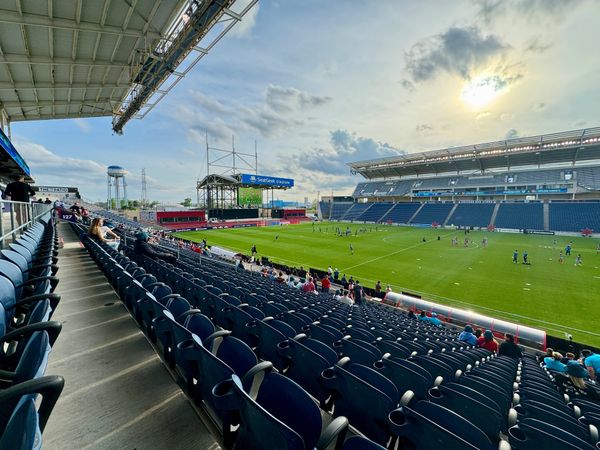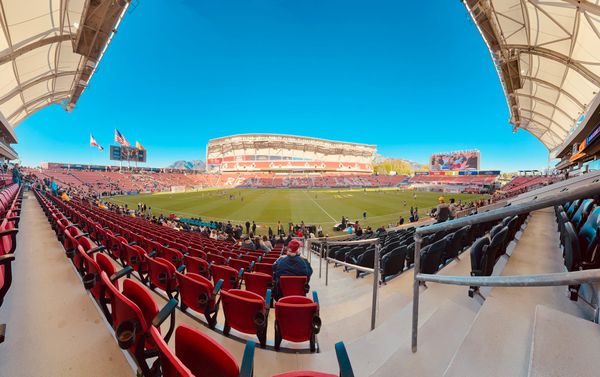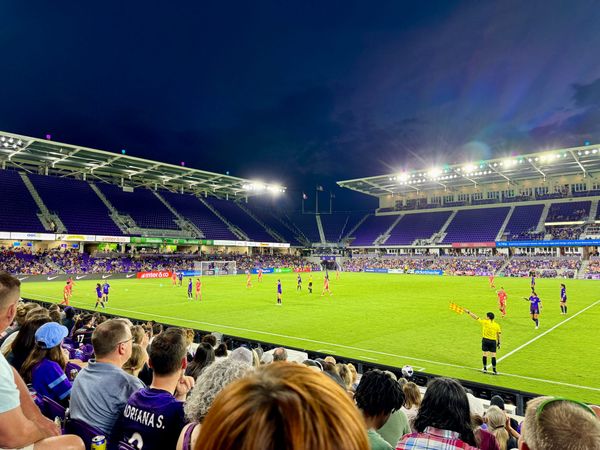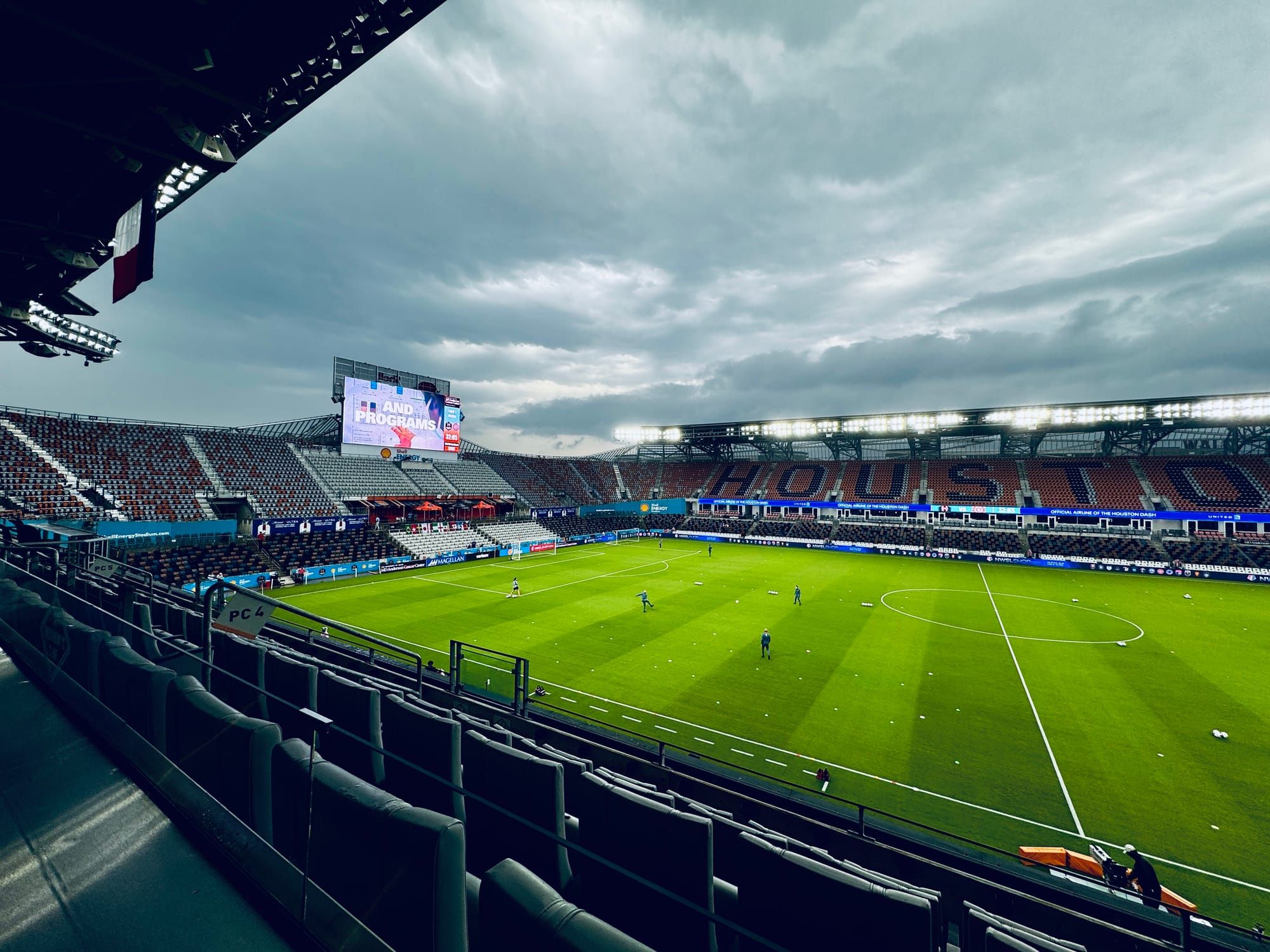
Shell Energy Stadium has been home to the Houston Dash since the team’s debut season back in 2014. It’s also home to the MLS men’s soccer team, the Houston Dynamo, with both clubs helmed by a single ownership group. When the stadium opened in 2012, it was the first MLS stadium within a major city’s downtown, and it’s now part of Houston’s “Stadium District,” which includes Minute Maid Park for the MLB’s Houston Astros, and the Toyota Center, where the NBA’s Houston Rockets play.
Stadium information
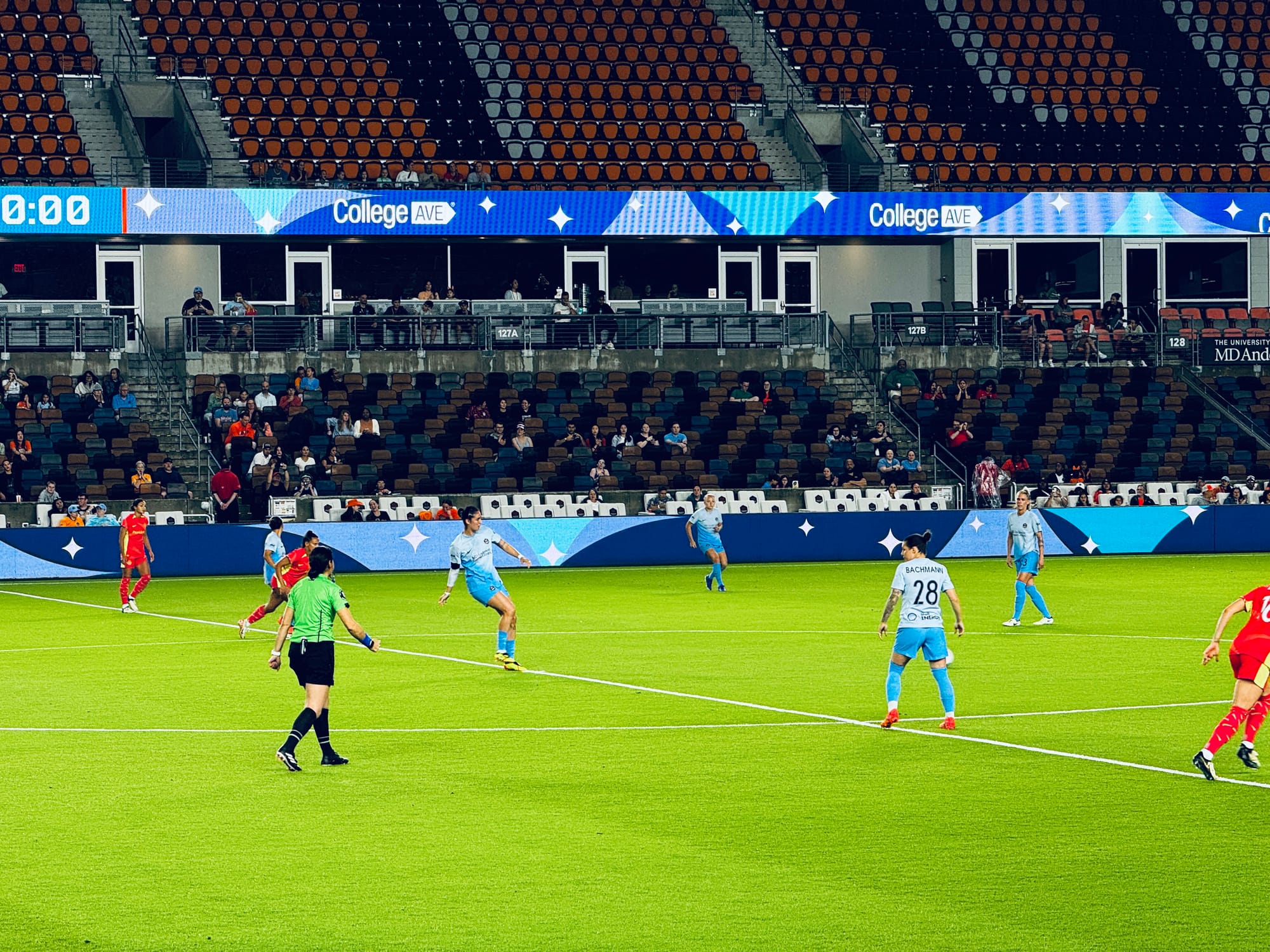
Shell Energy Stadium maxes out at just above 20,650 fans, but for most of the 2024 season, Houston Dash home games typically attracted 5,000 to 7,000 fans. Due to low attendance, seats are sold in the lower 100-level section closer to the pitch. Some fans might love the up-close view of players, but personally, we prefer being higher up to see play formation and the “shape” of teams as matches progress.
In 2023, the stadium was renovated and every single plastic seat was replaced with more comfortable, high-end mesh seats.
If you’re wondering what that’s like, think of those Herman Miller Aeron chairs famous in tech-industry offices. They’re comfy and supportive and the mesh gives your back some airflow on hot days, while also staying cooler than plastic seats baking in the Texas sun before you arrive. We found them to be extremely comfortable and they give the park a high-end feel. We’ve only previously seen these kinds of seats in VIP sections at other stadiums, so it’s a welcome upgrade for all here.
Where to sit
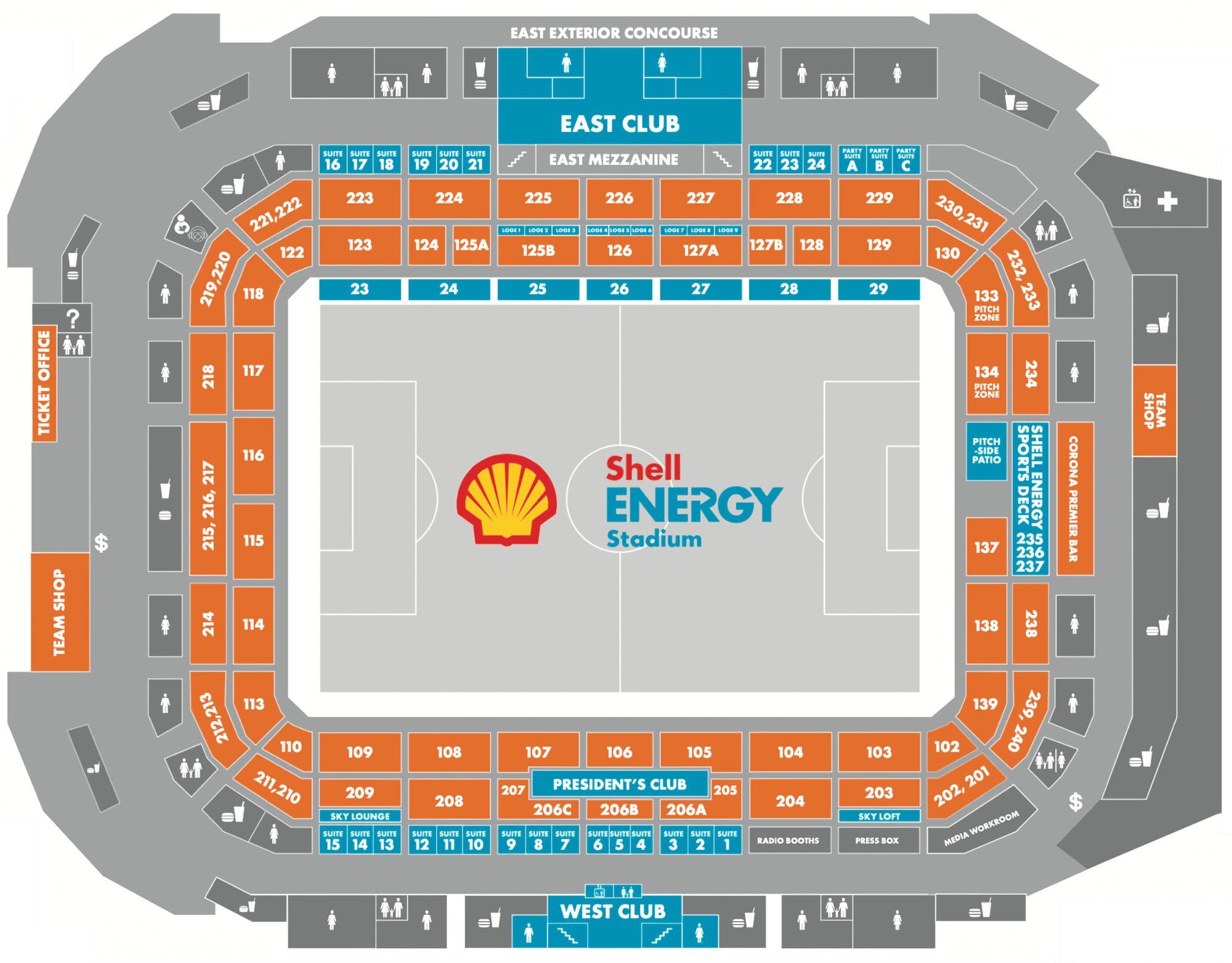
As mentioned, most Houston Dash home matches only sell tickets in the 100-seating level, and if you’re attending a daytime kickoff and want some relief from the sun, you’ll want to stick to the west side of the stadium, from sections 102 to 110. For night games, seat choice won’t be as much of an issue so you can grab spots wherever you like.
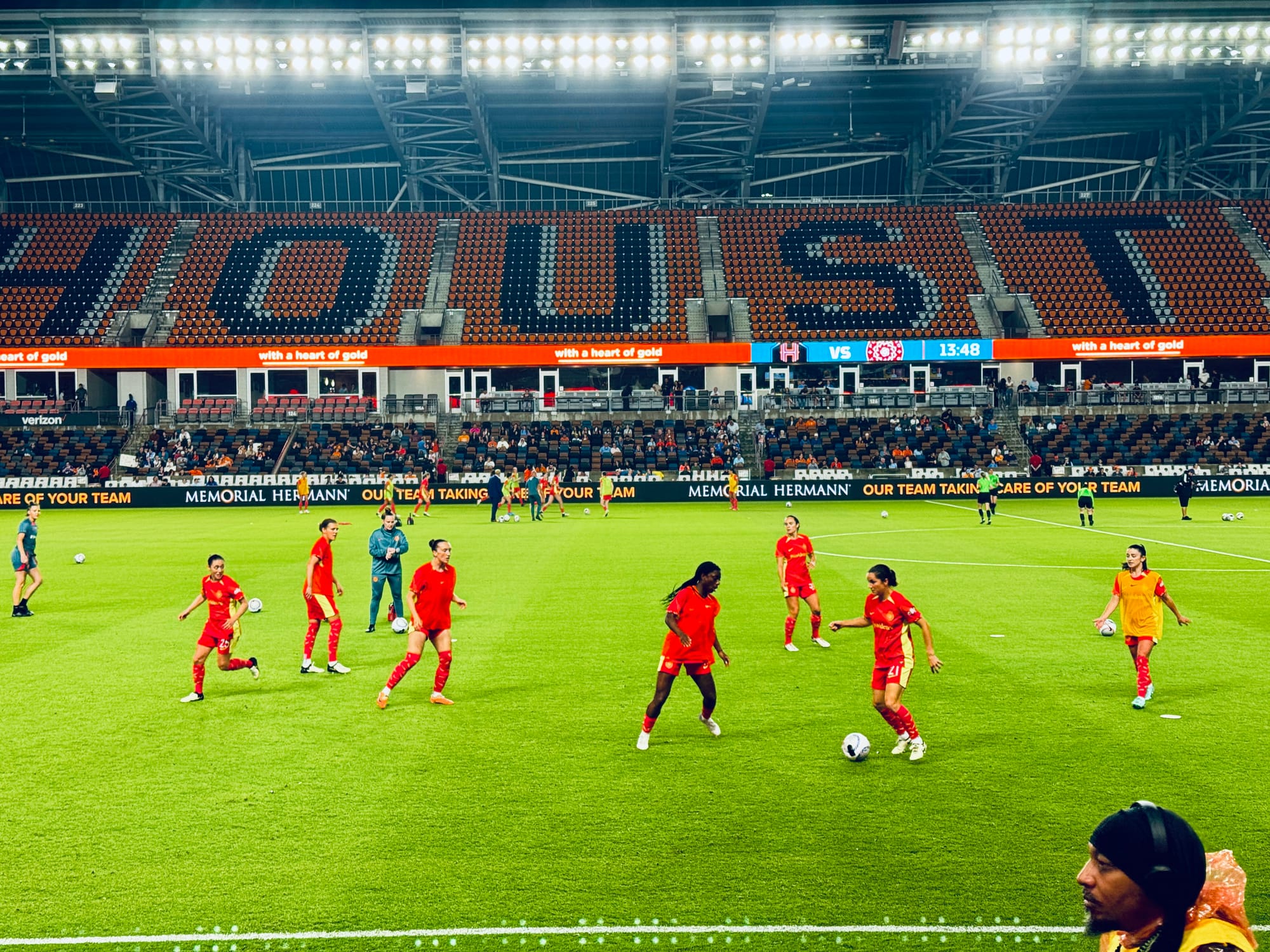
One thing worth noting is that both sides of the pitch have an overhanging roof to provide a bit of coverage from rain and sun in upper rows, but the seats at each goal’s end are mostly uncovered. Also keep in mind — even during day games — that stadium lights at the tops of the overhanging roofs will be on and they can feel a lot like car headlights beaming at you in a way that is occasionally annoying to look at in the stands.
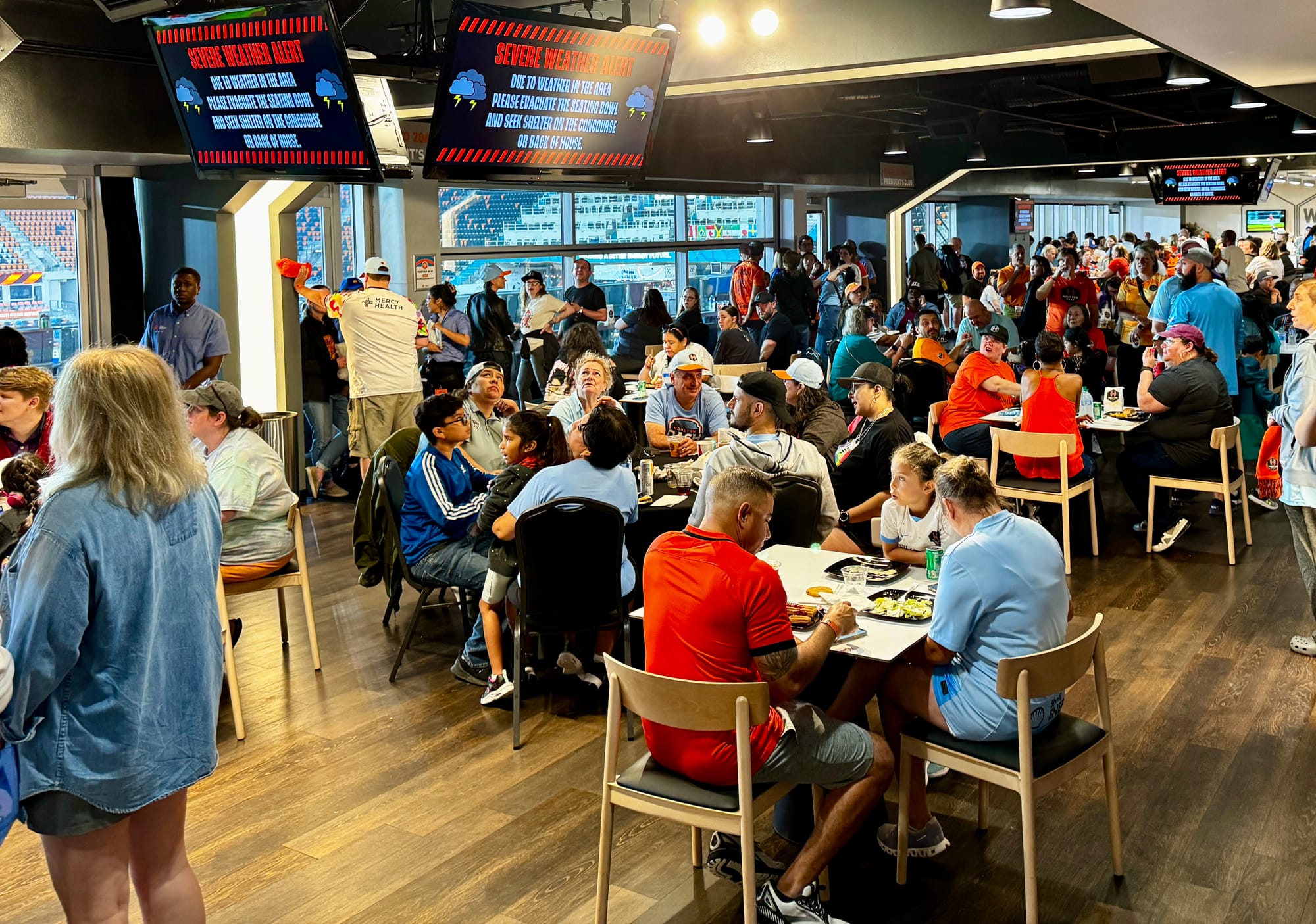
Shell Energy has two large club areas, which is unique within the league. About half the stadiums currently have a club option and aside from Houston, it’s only one per venue. Both clubs feature large indoor spaces to get catered meals and drinks from bartenders within a temperature-controlled lobby. For our game, we bought seats in section 106 and it included West Club access, which was a nice surprise perk. Given that most games in Houston are hot and humid, you can make an argument that the extra $30 to $40 per ticket to add club access is worth it to help cool off before games and during halftime in those air-conditioned spaces. The price also included food inside the club that was top-notch, akin to meals you’d get at a fancy wedding than any stadium.
- Most games only sell tickets in the 100-level lower sections — you'll be closer to the pitch but lose some tactical perspective on play
- For daytime kickoffs, stick to sections 102–110 on the west side to stay out of the Texas sun
- The $30–40 club upgrade for sections near 106 gets you access to an air-conditioned indoor lounge — well worth it in Houston's heat/humidity
- Shell Energy is the only NWSL stadium with two full club areas, both with indoor catering and bartenders
What to eat and drink
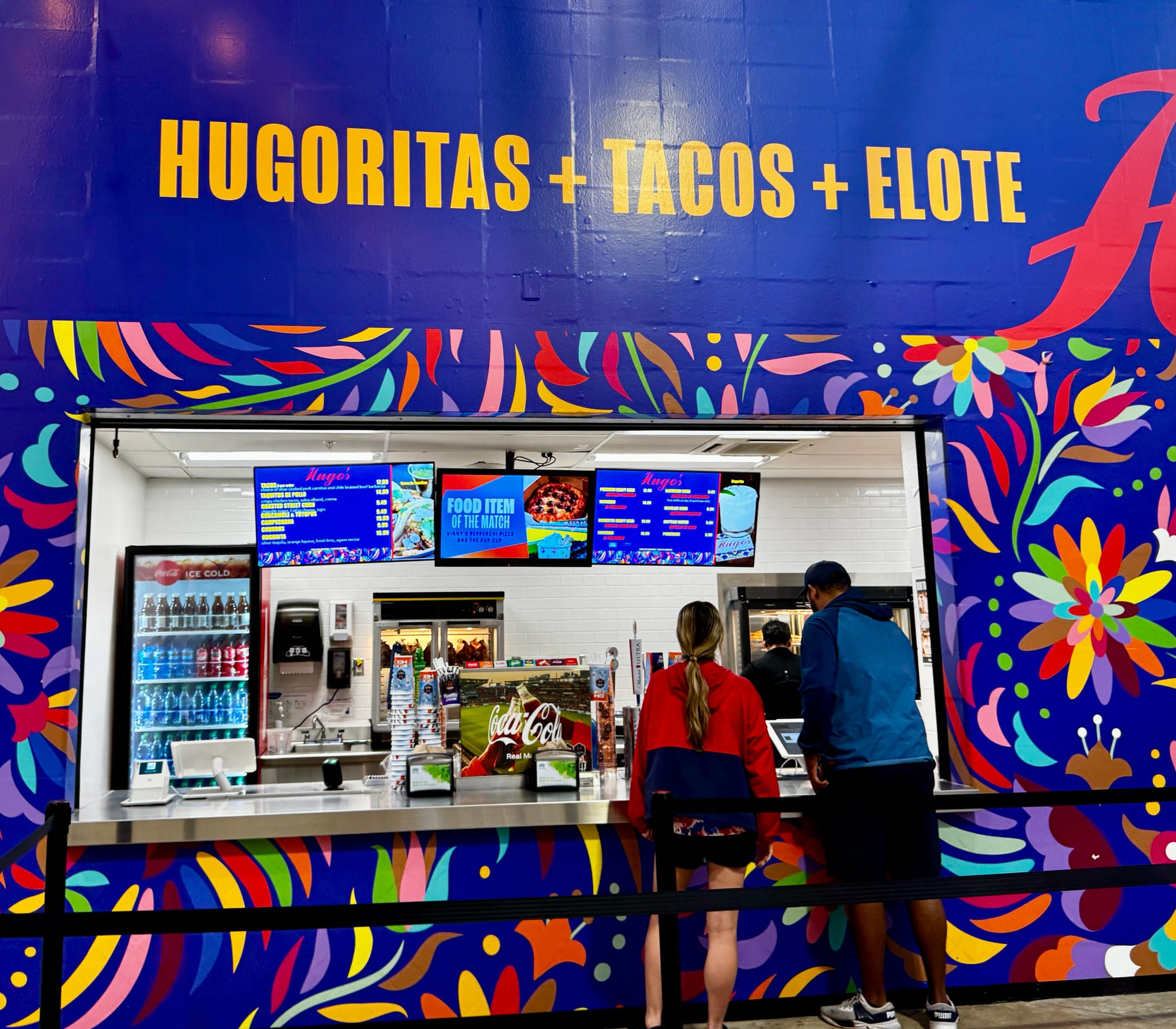
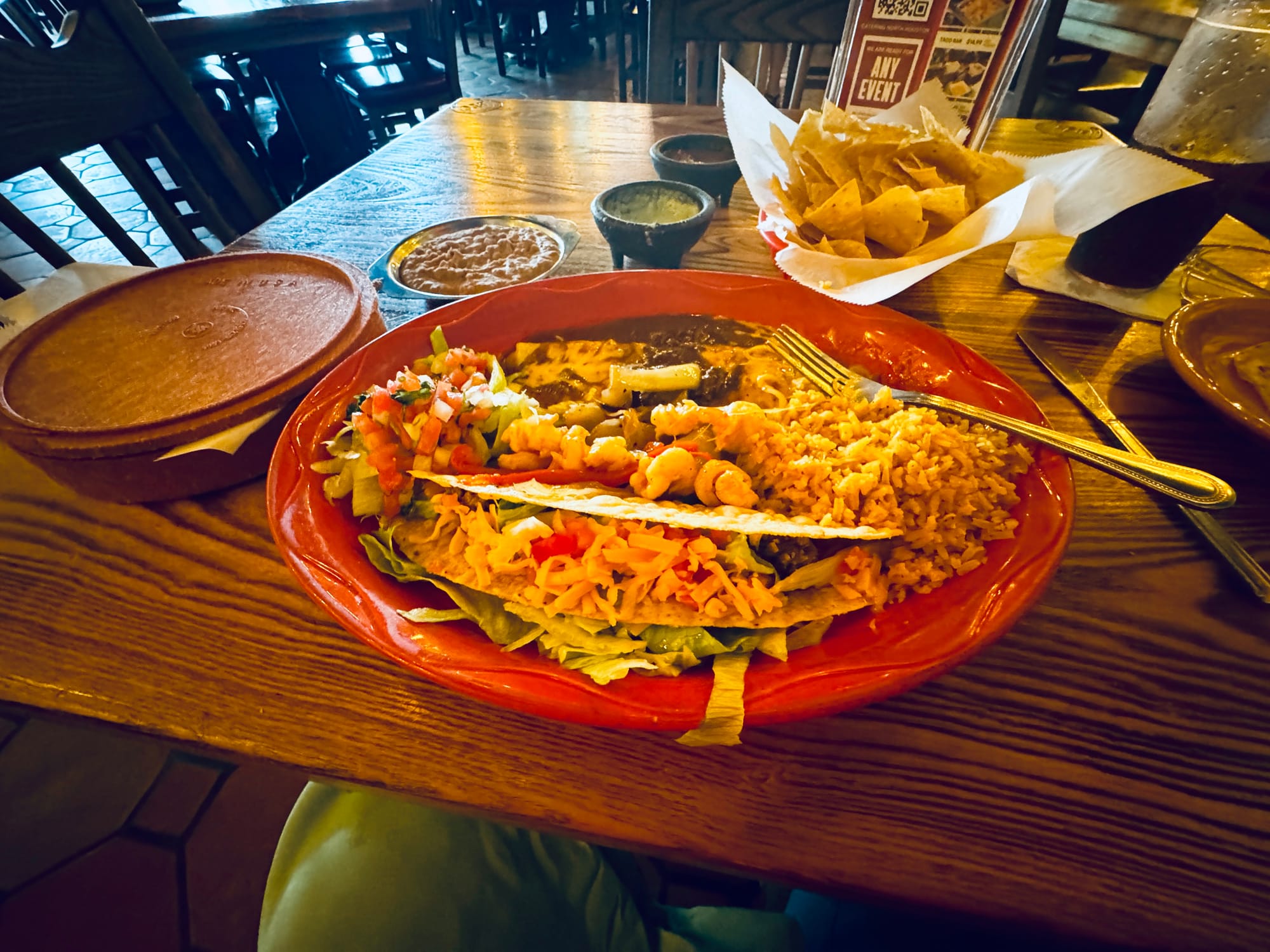
Houston’s stadium has probably the highest amount of localized cuisine of any stadium across the league. Sure, you can get traditional fare like pizza or burgers, but there were multiple places to get lots of local Tex-Mex and Mexican specialties we’ve seen nowhere else.
The local cuisine at this stadium is legendary: there are multiple versions of elote/street corn, lots of torta and churro options, and for drinks, many flavors of agua frescas and micheladas.
There was even a bar selling alcoholic daiquiri-style frozen drinks we’ve only seen in New Orleans bars before. We tried out a smashburger and a couple pork tacos that were pretty great.
We love seeing local food incorporated into a stadium’s cuisine because it makes a trip to a game unique, but for most teams, regional food is usually about one-third or less of the total options. In Houston, it felt like 75% of the concession stands around the concourse were selling food you could only get at a game in Houston, which was great to see.
Team merchandise, accessibility, restrooms, and pre-game activities
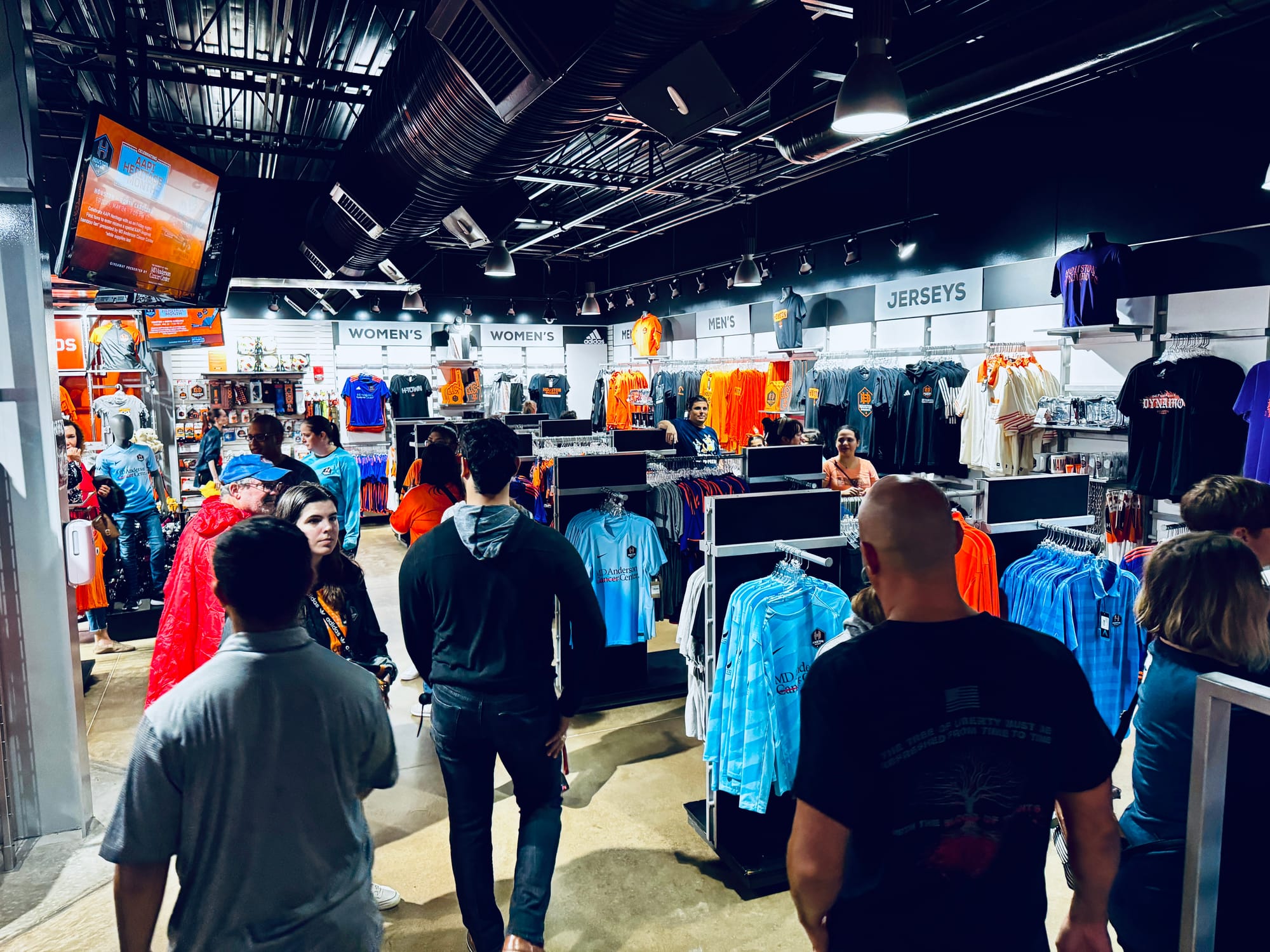
Shell Energy Stadium has a large brick-and-mortar store selling T-shirts, jerseys, and more for both the Houston Dash and Dynamo teams, and on the night of our visit, the store was packed with plenty of Dash gear and souvenirs. It’s great to see a club give fans so many options, as this location practically felt like a supermarket in size, bigger than most NWSL stadium stores.
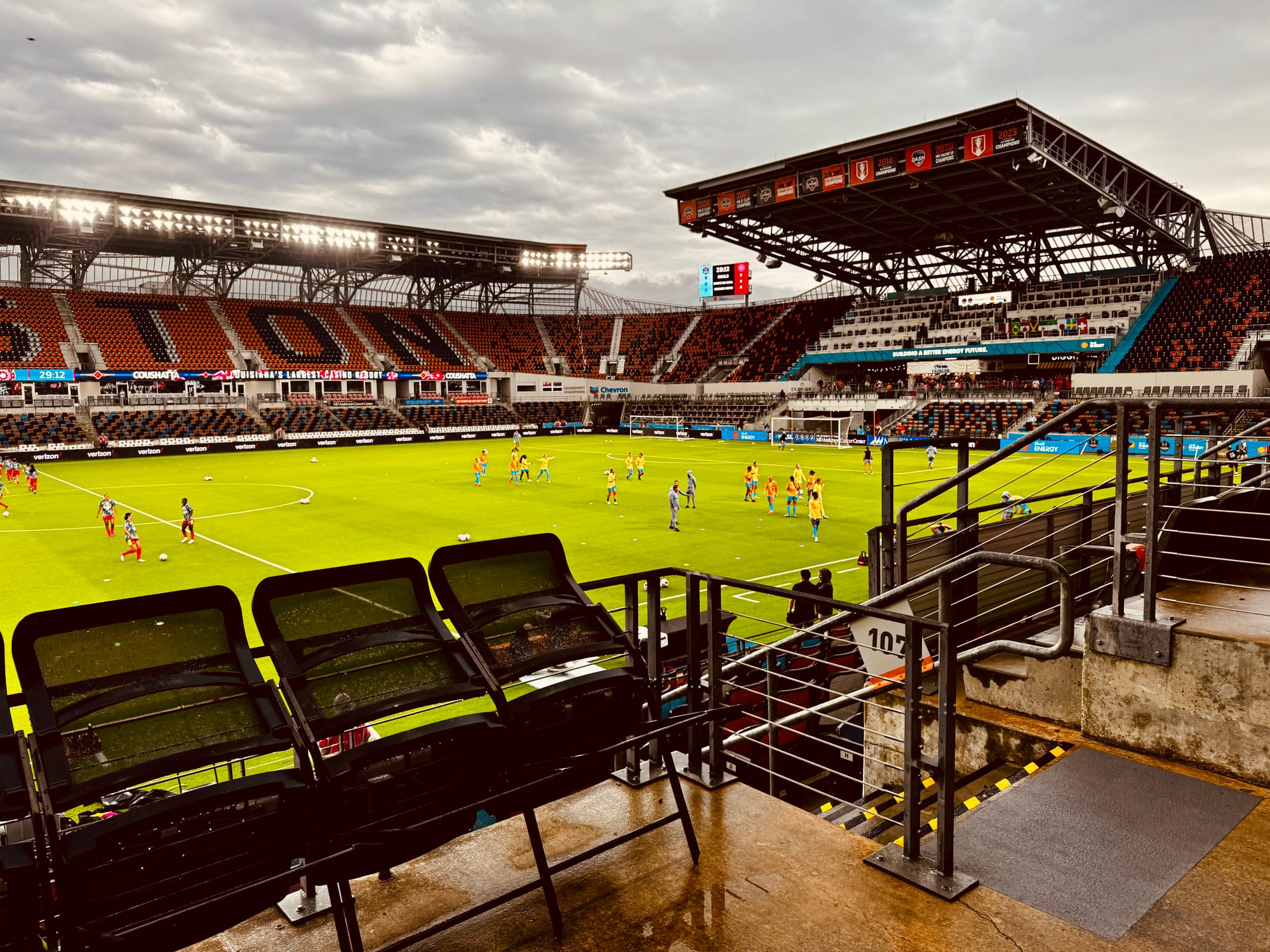
Accessibility-wise, many areas along the top of the 100 section would be good places to view matches from a wheelchair with room for companions. The West Club also offered a large, flat, outdoor mezzanine just off the main area where food and drinks were served, though we can’t say if staff would let you view a full game from that level.
Restrooms were ample and because it was a small crowd on the night of our visit — likely due to earlier thunderstorms that day and the long game delay we faced once inside the stadium — the bathroom facilities offered good privacy and were roomy.
Pre-game activities were limited due to sporadic thunderstorms in the region, though it looked like the large sidewalks outside of the stadium could support vendors and pop-up stands to act as a pre-game fan zone.
Pre-game, in-game, and post-game vibes
Pre-game activities were chill and hampered somewhat by sporadic rain, but our match was during a special “bring your dog to the game” night. That made the concourse area fun to be in, because you could see and pet so many types of very good dogs and chat about soccer with their happy owners.
When our game finally got rolling 2.5 hours after it was scheduled (had to wait out lightning strikes, as they could only safely play once storms completely passed), the vibes were mostly good, but unfortunately about a third of the crowd left during the long delay.
If we had to compare Houston to every other stadium experience, we’d say one thing that stood out were the Houston fans, who seemed a tad meaner than at other venues. These days, NWSL players move so often from team to team that we ourselves frequently cheer for several members of most opposing teams as those players used to either be on our favorite teams, or on the U.S. Women’s National team. But at our game in Houston that night, it was more like an NFL or MLB stadium atmosphere, where local fans were slightly hostile to the visitors. The crowd erupted in loud boos any time the visiting team scored a goal or a call went their way.
That said, it’s normal for crowds to favor the home team during 50/50 or questionable calls. You’ll see two players collide and when the ball is awarded to the visiting team, a mixed response of boos and cheers in stadiums is expected. But in Houston at our particular match, every call from the refs that went to the visitor’s advantage was roundly booed. We don’t normally think of Houston sports as any more territorial than other teams, but the fans sure seemed to dislike the visitors more than we’ve experienced before. Hopefully it was a fluke, perhaps the home crowd was frustrated by the long delay that night.
On the flip side, post-game vibes were extremely chill. Shell Energy is the only stadium in our entire tour where their club levels remained open and operating for an hour after games to let people continue to enjoy those spaces. So not only weren’t we ushered out of our seats by security like other venues, we were welcome to sit, stay, talk, and go into the club for quite a while after, which was refreshing and frankly, surprising.
For autographs, being low in the stands above the player benches along the west side, in sections 105 to 107, is probably your best bet for getting things signed by players after a match. Players stuck around for quite a while post-match.
- Houston fans lean more territorial than most NWSL venues — expect vocal home-crowd energy
- Weather is a real wildcard: thunderstorm delays of 2+ hours are not unusual, monitor forecasts and be mentally prepared to wait it out inside
- Post-game is a standout — Shell Energy is the only NWSL stadium where club areas stay open for a full hour after the final whistle, so there's no rush to leave
- For autographs, players stick around sections 105–107 above the player benches after games
Getting there
Flying in
Houston is a major metro area that serves as a hub for United (ever since it merged with Continental Airlines), so catching flights there is easy from virtually any airline. We found cheap flights, and thanks to it being a prime location for the oil and gas industry, there are plenty of nonstop flights from all corners of the country.
Renting a car or going car-free
Texas is a state bigger than most world countries. Although it was our first time in Houston, it didn’t seem like an easy place to rely on public transit or walking, so we rented a car to get around. While there are some light rail and bus options in Houston, it’s Texas; it feels like a city designed around the automobile and unless you’re staying close to the stadium, we’d suggest visitors rent a car to get wherever they need to go.
Driving in
Our match happened to be a night when the Houston Astros were playing a game just down the street, and as a result, the parking prices around Shell Energy’s lots were increased to $40 per car since they’re considered outlying lots for baseball fans. When the Astros aren’t playing, parking is closer to $20 just a block away from Shell Energy.
Taking public transit
Just outside of Shell Energy’s entrance is the East-Downtown (EaDo/Stadium) station on the METRORail line, which was great to see. Unfortunately, the light rail line goes mostly east from the stadium toward just a couple neighborhoods. We checked Google Maps, but unfortunately there were no easy light-rail options between our hotel and Shell Energy Stadium’s stop so we never got to try it out. Still, with enough planning, if you happen to be staying somewhere along that rail line, it could be a great cheap and fast option for getting to and from the park that would let you skip parking fees.
Where to stay
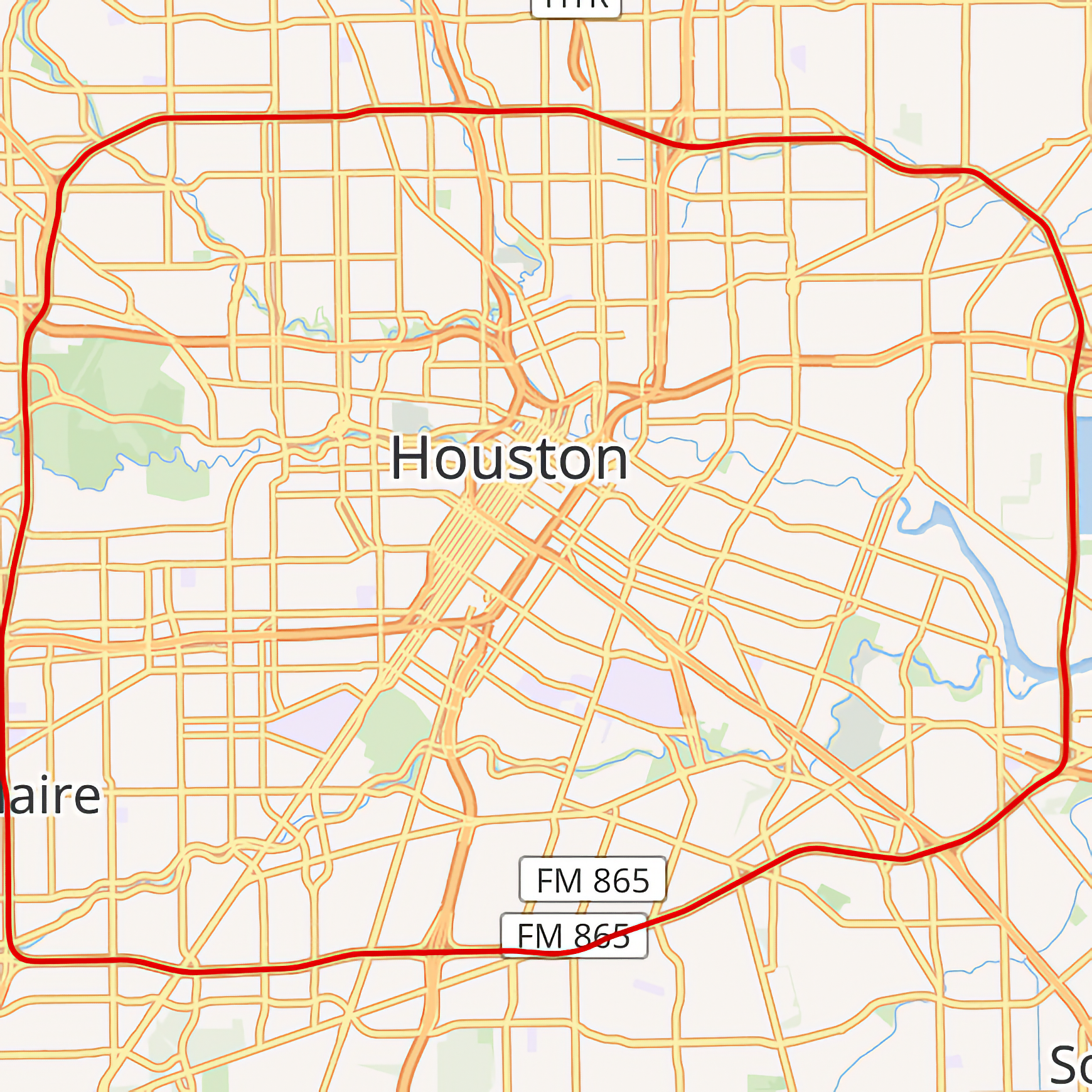
The 610 freeway that surrounds downtown Houston creates a virtual border known locally as “The Loop” and pretty much any hotel you choose within it will be relatively close to the stadium and other things to do around town. If you’re looking for fancy high-end hotels you’ll find them just west of the loop, near the Galleria mall section of town. On our trip, we stayed at a hotel close to the city center that was a 20-minute drive from the airport (north of The Loop) and only a 15-minute drive to the stadium.
What to do in Houston (besides watch soccer)
Houston is a unique place in Texas, with a deep, rich history going back hundreds of years. It’s where Beyoncé and so many of today’s music trends began. Lately it’s become famous as the only major U.S. city without strict building codes, which can lead to interesting results, but for the most part, people are free to build housing and businesses wherever they please and that might serve as a blueprint for other cities (for better or for worse) to adopt.
There are a number of interesting things to see and do around town, so let’s summarize a few options.
Museums
With so many previous barons of the energy industry in the city, a lot of art museums started as personal collections from people who got very rich from oil over a hundred years ago.
The Menil Collection includes surrealist paintings (some by René Magritte) and it also supports local artists with free housing while they work. The Rothko Chapel is in the center of Houston’s Museum District and it’s a free, non-denominational space with fascinating architecture in which to walk around. It’s also home to a collection of 14 works by Mark Rothko worth checking out. Houston’s Museum of Fine Arts is another place worth visiting with a huge collection of contemporary art on display.
Houston’s famous “Mission Control” for NASA launches (as in “Houston, we have a problem”) is part of the Space Center, but it’s a 30- to 40-minute drive from downtown Houston so you’ll want to set aside some time to head out and take that all in. The Houston Museum of Natural Science is also a popular destination within town. Additionally, there are ample parks, a zoo, and an aquarium around the city worth checking out.
Food
Houston is home to several cuisines, but most famously, Tex-Mex, which was invented at a still-running restaurant chain called El Tiempo. A sizzling skillet of fajita meat and veggies served alongside handmade tortillas is something you can get at any Chili’s in the country, but if you want the original version, the restaurant that came up with the dish is the original Ninfa’s on Navigation Boulevard.
Houston is also known for other cuisines like Southern, soul food, Cajun, Creole, Vietnamese, and Nigerian. There are also interesting mashups you’ll find nowhere else, like Viet-Cajun, which takes things like a classic crawfish boil and infuses it with Southeast Asian ingredients and flavors. There’s also classic Texas BBQ, where slow-cooked, smoked brisket has been perfected to the point that CorkScrew BBQ (just north of the Loop) is one of only four Texas BBQ restaurants on earth that has earned a Michelin star.
Houston is a great food town and you’ll likely have fantastic meals almost anywhere you look around.
Further out
Along with the Space Center, a popular day trip from Houston is heading to Galveston to visit the Gulf Coast and all its beaches. It’s about an hour’s drive from Houston each way, but with lovely coastlines and milder temperatures, it can give visitors a break from the extreme heat that dominates the region most of the year.
- El Tiempo invented Tex-Mex fajitas — the original Ninfa's on Navigation Boulevard is still the best place to taste the dish that started it all
- CorkScrew BBQ just north of The Loop is one of only four Texas BBQ spots on earth with a Michelin star — plan ahead, lines are legendary
- NASA's Mission Control ("Houston, we have a problem") is 30–40 minutes south at the Space Center — set aside half a day
- Houston's Viet-Cajun food scene is unlike anything else — crawfish boils infused with Southeast Asian spices are a local specialty worth seeking out
Attending a Houston Dash game can be a fun day in a big stadium that is one part of a lively region filled with great food and things to see and do. Keep in mind that weather plays a big part in Houston, as it’s one of the few NWSL venues with sporadic thunderstorm delays each season so if you’re traveling to enjoy a game, be sure to monitor weather apps and pack suitably for your trip.